

Organizations today face a structural problem that is slowing down their move to cloud-native maturity. They’ve adopted modern DevOps tools, yes. They’re running Kubernetes. They’re using sophisticated observability platforms. But the people-and-process piece often remains stuck in the traditional enterprise IT paradigm. The rift is simple: developers are tasked with delivering features, and operational staff […]
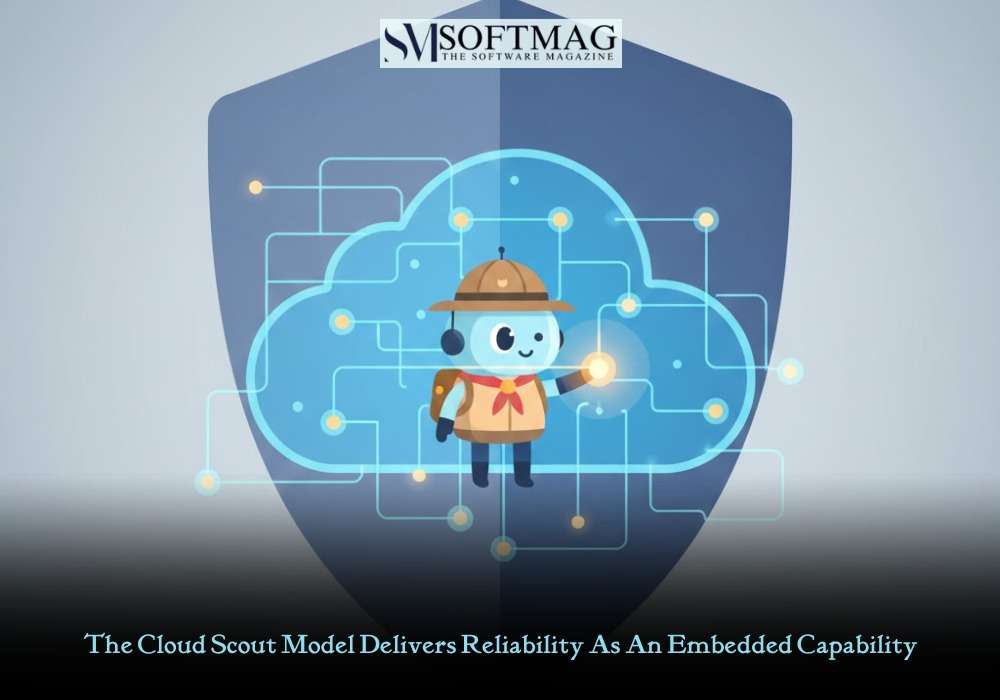
That is an insightful and timely model emerging in the Site Reliability Engineering (SRE) and DevOps communities. The Cloud Scout Model addresses the core challenge of scaling reliability expertise by making it a directly embedded capability within product teams.
It is explicitly designed to break the cycle where expensive, senior SREs are trapped fighting the same symptoms repeatedly instead of designing prevention.
The Core of the Cloud Scout Model
The Cloud Scout Model introduces a highly senior, cloud-native expert—the Cloud Scout—who is placed directly within a feature-focused product team for a fixed duration.
This role is not meant to replace the central SRE function (which continues to manage shared platforms and infrastructure), but to act as a catalyst and co-designer for reliability.
1. The Embedded Expertise (Proximity is Key)
-
Deep Context: The Scout sits with the development team, attends their stand-ups, and is involved in architectural design sessions for new features. This proximity ensures the Scout understands the “why” behind the feature and the business domain.
-
Proactive Influence: This deep context allows the Scout to influence design for reliability from the very first architectural sketch. By eliminating an entire class of potential failures during design review, the team prevents issues that would have otherwise led to future toil and incidents.
2. The Focus on Knowledge Transfer
-
Co-Design and Training: The Cloud Scout’s primary mission is knowledge transfer. They don’t just fix things; they show developers how to build resilient systems and properly leverage cloud-native tooling.
-
Goal: Self-Sufficiency: When the fixed engagement ends, the product team is left significantly more capable and self-sufficient, having internalized best practices for observability, performance, and scaling.
3. Leveraging AI for Insights
The model recognizes that no human can process the staggering volume of telemetry data generated by modern cloud platforms.
-
AI-Powered Companions: The Cloud Scout leverages AI-powered tooling (AIOps/Agentic AI) to process billions of metrics, logs, and traces.
-
Architectural Insight: These systems identify non-obvious patterns, subtle architectural “smells,” and potential points of failure that a human eye would easily miss. This allows the Scout to focus their limited time on systemic prevention rather than manual triage.
Outcomes of the Embedded Capability
By embedding reliability as a capability rather than maintaining it as a siloed function, organizations achieve measurable benefits:
-
Reduced Alert Fatigue: Systemic flaws are fixed at the source, dramatically cutting down on alert noise and false positives.
-
Faster Time-to-Resolution (MTTR): When outages do occur, the team responding knows both the product and the platform intimately, leading to much quicker diagnosis and recovery.
-
Accelerated Feature Roadmap: Reliability work becomes integrated and proactive, meaning product teams are liberated to move faster because they trust the foundation of their systems.
The Cloud Scout Model represents a structural shift from reactive monitoring to proactive architectural co-design within the flow of product development.