
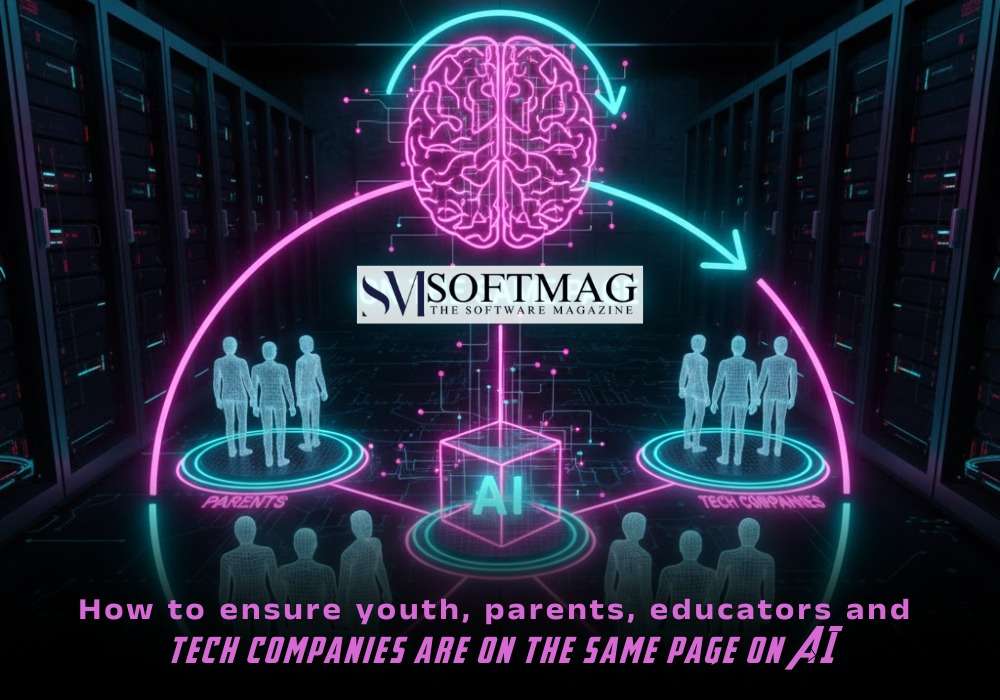
Artificial intelligence is now part of everyday life. It’s in our phones, schools and homes. For young people, AI shapes how they learn, connect and express themselves. But it also raises real concerns about privacy, fairness and control.
Ensuring alignment on Artificial Intelligence (AI) among youth, parents, educators, and tech companies requires a multi-pronged strategy focused on shared understanding, clear policies, and collaborative governance. The core is to move from fragmented perspectives to a unified, human-centered approach to AI development and use.
1. Establish a Common Foundational Understanding: AI Literacy 🧠
The first step is closing the knowledge gap across all groups. This means focusing on AI literacy—not just how to use the tools, but how they work, their limitations, and their ethical implications.
- For Youth: Provide hands-on, project-based learning to demystify AI. Teach them to use tools responsibly (e.g., prompt engineering, fact-checking AI outputs) and foster critical thinking about bias, privacy, and the difference between simulated and real-world interactions.
- For Parents and Educators: Offer accessible professional development and workshops that cover AI basics, tools for classroom integration, potential mental health impacts, and practical steps for setting boundaries and guiding ethical use at home. This must include training on how to teach, not just monitor, responsible digital citizenship.
- For Tech Companies: Partner with educational institutions to provide clear, non-technical explanations of their AI models, including how they are trained, what data they use, and their potential risks.
2. Develop Transparent and Adaptive Governance Frameworks 📜
Policies and standards must be developed collaboratively to ensure they are practical, ethical, and enforceable.
- Multi-Stakeholder Committees: Create governance councils or working groups that include representatives from all four groups (youth, parents, educators, and tech company design/ethics teams). These bodies should regularly meet to discuss emerging issues and co-create guidelines.
- Transparency and Accountability: Tech companies must provide clear, age-appropriate disclosures about when youth are interacting with AI, what data is collected, and how it is used. They should also establish clear mechanisms for reporting harm or bias that are accessible to students, parents, and educators.
- Prioritize Safety and Privacy: Implement and advocate for enforceable standards that prioritize student data privacy (modernizing laws like FERPA and COPPA where necessary) and prohibit emotionally manipulative or dependency-forming design features in AI products aimed at minors.
3. Foster Open Communication and Shared Values 🗣️
Alignment cannot happen if stakeholders don’t have a space to express their differing priorities.
- Dialogue Forums: Organize regular community forums (in-person or virtual) where youth, parents, and educators can directly ask questions of tech company representatives and policymakers. These forums can focus on topics like academic integrity, job market skills, and mental well-being.
- Shared Ethical Core: All groups should agree on a set of core values for AI use in education, such as fairness, non-discrimination, human oversight, and the preservation of human-centric skills (e.g., critical thinking, collaboration). Educators need to feel comfortable that AI will enhance and not replace essential learning dynamics.
- Youth-Centric Design: Tech companies must integrate youth voices into the product design and testing process to ensure tools are developed with their autonomy and developmental stage in mind. Youth should be seen as active participants, not just passive consumers.
4. Align Incentives and Outcomes 🎯
The final step is to ensure that the goals of each group are mutually supportive.
- Educator/Parent Empowerment: Ensure that AI tools are genuinely designed to reduce administrative burdens for educators and provide helpful insights for parents, making them advocates for responsible AI adoption.
- Future Workforce Preparation: Highlight how AI literacy, critical evaluation, and responsible use are now core employability skills. This helps parents and educators see AI as a necessary tool for future success, aligning with the youth’s need for relevant education.
- Tech Company Responsibility: Encourage and, where necessary, regulate tech companies to prioritize safe and ethical design over purely maximizing engagement or commercial gain from youth users. This shifts the focus to long-term trust and societal contribution.