
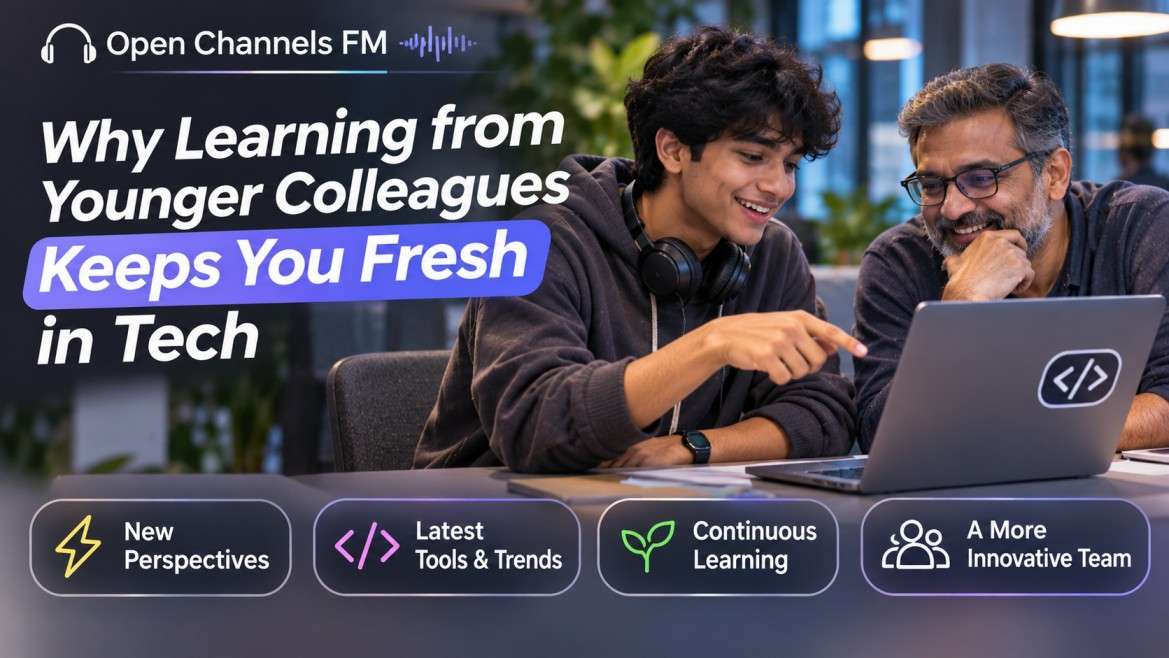
Reverse Mentorship: Why Learning from Younger Colleagues Keeps You Sharp
In tech, the traditional career script is familiar: senior engineers and managers mentor the newcomers, passing down tribal knowledge, architectural wisdom, and hard-earned lessons from past outages.
But in a recent episode of Open Channels FM, hosts Bob Dunn and Cami MacNamara flip that dynamic on its head. Their takeaway? The fastest way for seasoned tech veterans to avoid professional stagnation isn’t doubling down on what they already know—it’s actively learning from their younger colleagues.
Escaping the Comfort Rut
Experience is a superpower, but it often doubles as a blind spot:
* The Legacy Inertia: Senior developers naturally default to the battle-tested stacks, terminal workflows, and frameworks they mastered years ago. While reliable, it makes spotting better, faster alternatives harder.
* No Unlearning Required: Early-career engineers enter the field without legacy baggage. They approach problems with the latest tooling—from AI-assisted scaffolding to modern serverless primitives—without having to unlearn older paradigms first.
* Spotting Process Inefficiencies: Junior team members often ask the simplest, most disruptive questions (“Why are we doing this manually?”) that uncover outdated habits seniors have stopped noticing.
The Power of Reverse Mentorship
Staying relevant in an industry moving at breakneck speed requires humility over hierarchy:
* Curiosity Over Defense: Instead of swatting away new tools or communication styles as passing fads, seasoned leaders stay sharper when they approach new workflows with genuine interest.
* Balancing Intuition with Innovation: The most effective teams pair the fundamental judgment of senior veterans (system resilience, risk mitigation) with the experimental appetite of younger peers.
The Takeaway
Longevity in tech doesn’t come from guarding your seniority—it comes from staying adaptable. Treating younger teammates as teachers rather than just apprentices keeps your skills current, breaks open institutional ruts, and ensures your years of experience remain an asset instead of an anchor.