
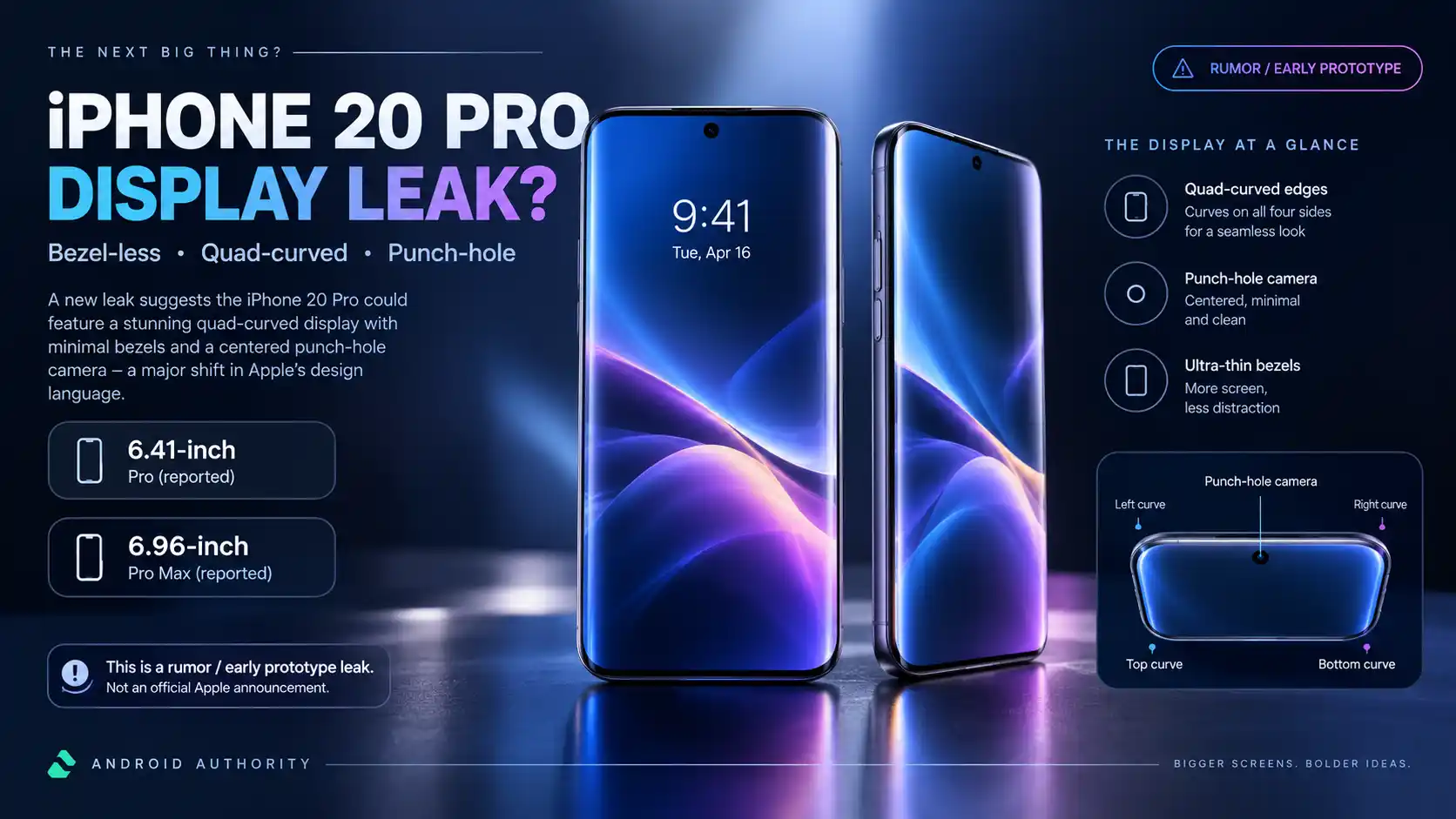
Leaked Specs Reveal Quad-Curved, Borderless Display for the iPhone 20 Pro
Early hardware leaks are offering a first look at Apple’s display overhaul planned for its flagship smartphone lineup. According to details shared by supply chain leaker Digital Chat Station, testing for the upcoming iPhone 20 Pro series points to larger screen sizes, higher native resolutions, a quad-curved bezel-less design, and a significantly smaller front-facing camera cutout.
Screen Size and Resolution Upgrades
The leaked specifications show slight increases in screen real estate across both Pro models, paired with upgraded display resolutions:
-
iPhone 20 Pro: Features a 6.41-inch display with a resolution of 2,686 × 1,236 pixels (up from the 6.3-inch panel on current Pro models).
-
iPhone 20 Pro Max: Expands to a 6.96-inch panel running at 2,912 × 1,340 pixels, pushing the larger model extremely close to a full 7-inch display footprint.
Quad-Curved Glass and Borderless Design
Rather than sticking to the flat-edge glass design used in recent generations, Apple is reportedly testing a quad-curved display.
Unlike aggressive “waterfall” curved displays seen on older Android flagships, Apple’s approach utilizes micro-curves on all four edges. By subtly bending the glass around the top, bottom, and side borders, the physical bezels are visually absorbed into the frame, creating the appearance of a seamless, borderless slab of glass.
Shrinking the Dynamic Island
Alongside the screen restructuring, Apple is actively working to minimize front-facing hardware cutouts:
-
Smaller Cutout Footprint: Testing indicates a much smaller punch-hole or compressed pill cutout for the TrueDepth camera array.
-
Compact Dynamic Island: Shrinking the physical hardware footprint allows iOS to render a far less intrusive Dynamic Island, dramatically increasing usable screen area.
-
Step Toward Full Under-Display Sensors: The reduction serves as an intermediate step as engineers continue developing under-display Face ID and camera technologies.
What This Means for the Lineup
While these specifications reflect early engineering and testing builds, the move toward quad-curved glass and reduced cutouts aligns with long-standing reports that Apple is targeting a major aesthetic redesign for its milestone 20th-anniversary iPhone devices. If these display changes reach production, the resulting screen-to-body ratio will mark one of the most substantial visual shifts for the iPhone platform in years.