
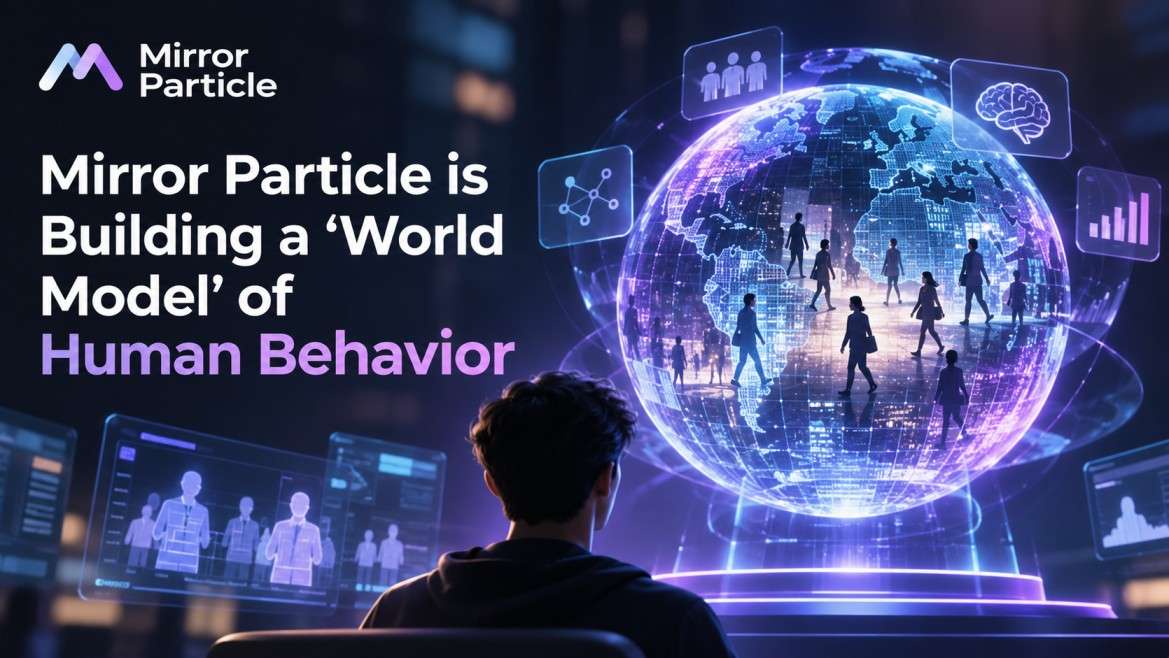
Simulating What People Do, Not What They Say: Inside Mirror Particle’s ‘World Model’
Most frontier AI labs define a “world model” around physical space: teaching neural networks how objects bounce, gravity pulls, or cars navigate streets.
San Francisco startup Mirror Particle—launching out of TechCrunch Disrupt’s Startup Battlefield—is applying that concept to a far messier domain: human psychology, perception, and decision-making.
Instead of using large language models to role-play personas, the company is building a foundational behavioral engine designed to forecast what real consumers will actually do.
Why Language Models Fail at Psychology
Today, brands routinely prompt LLMs like ChatGPT or Claude to simulate customer focus groups. Mirror Particle argues that approach has fundamental design flaws:
- Text Is Not Behavior: Large language models are trained on written internet corpora. They predict the next most likely token in conversation, not how an exhausted parent acts when walking down a grocery aisle.
- The “Stated vs. Revealed” Trap: Traditional market surveys capture what people claim they want (“I only buy organic, sustainable goods”). Real-world purchasing—revealed preference—is driven by subtle social pressures, budget trade-offs, and emotional impulse.
- Static Snapshots: Standard personas treat demographics as fixed. In reality, human behavior is fluid: a change in mortgage rates, a viral social media trend, or shifting life priorities radically alters consumer choices over time.
The Tech: Grounded in Cognitive Science
To simulate decision-making at scale, Mirror Particle pairs machine learning engineers with neuroscientists and behavioral researchers:
- Revealed Preference Over Dialogue: Rather than asking simulated buyers for opinions, the model tracks patterns in tangible actions—purchases, retention drops, and behavioral shifts.
- Dynamic State Shifts: The system simulates how external shocks (economic shifts, new competitive products, cultural trends) alter consumer willingness to pay, rather than spitting out generic demographic answers.
- Reframing Brand Hypotheses: In an early pilot with a major pet food brand debating whether chicken or beef imagery belonged on its packaging, the model surfaced that packaging graphics weren’t the problem—consumers already viewed the brand as low-cost and mass-market, meaning a package redesign wouldn’t fix its underlying perception deficit.
The Takeaway
The past three years of generative AI focused on automating content: writing blog posts, generating ad copy, and drafting scripts.
Mirror Particle represents a shift from generative creation to predictive strategy. By building an engine that models human incentive structures rather than conversational fluency, the startup is betting that the ultimate enterprise AI isn’t one that creates marketing assets—it’s one that knows whether customers will actually care.